About Mohammed Baida
I work across journalism, corporate communication, and AI-assisted content design.
My career began in traditional newsrooms, evolved into institutional communication, and now sits at the intersection where editorial discipline meets responsible use of AI in Arabic content.
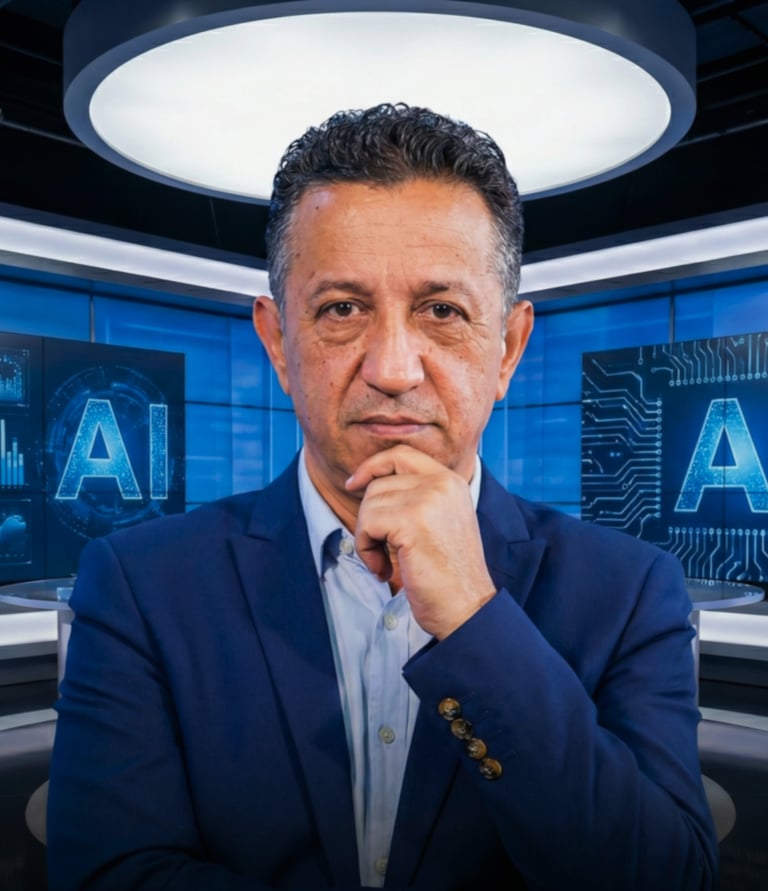
A mix of reporting, strategy, and experimentation.
My Story
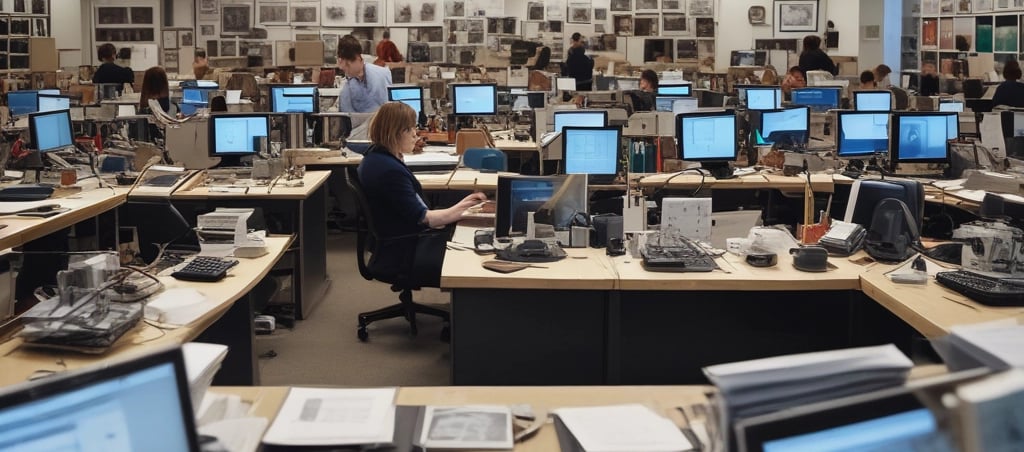
I began my career in economic journalism, spending more than a decade inside newsrooms where clarity, accuracy, and editorial discipline shaped everything. Those years taught me to question information, to organize ideas with intention, and to search for the cleanest, most meaningful sentence. It was a training ground that formed the foundation of how I write, think, and understand communication.
My move into corporate and institutional communication revealed a different world. Organizations were producing endless reports, statements, and campaigns, yet their messages were often fragmented or unclear. It wasn’t a shortage of content—it was a shortage of structure. What they needed was the newsroom mindset: respect for language, purpose, audience, and editorial sequence.
That discovery pulled me into strategic writing and the design of Arabic content systems. I began working with teams to rebuild their editorial processes—how ideas are shaped, reviewed, approved, and transformed into clear institutional messages. This became the core of my work: helping institutions communicate with coherence instead of noise.
“Institutions don’t struggle with content; they struggle with meaning.”
Then came the rise of AI. I approached it as a journalist would—test, verify, and adopt only what enhances the message. I found that AI can accelerate thinking, support editors, and strengthen writing, but it cannot replace human judgment or the instincts behind meaningful communication.
“AI can sharpen a sentence, but only humans can shape a voice.”
Today, I work at the intersection of journalism, institutional communication, and AI-driven content strategy. I explore how organizations can build clearer Arabic messages, create consistent editorial systems, and use AI responsibly to support—not overshadow—the human voice.
This website is a reflection of that journey and an invitation to anyone seeking stronger, sharper, and more intentional communication.
“Editorial discipline is the backbone of every credible message.”
“Communication fails when structure fails.”
“Messages become stronger when teams think like newsrooms.”
Mohammed's perspective has significantly enhanced our communication strategy, bringing both clarity and accuracy.
Lina M.


His combination of journalism and AI enhanced our content workflow, making it more efficient and seamless.
Omar K.


★★★★★
★★★★★
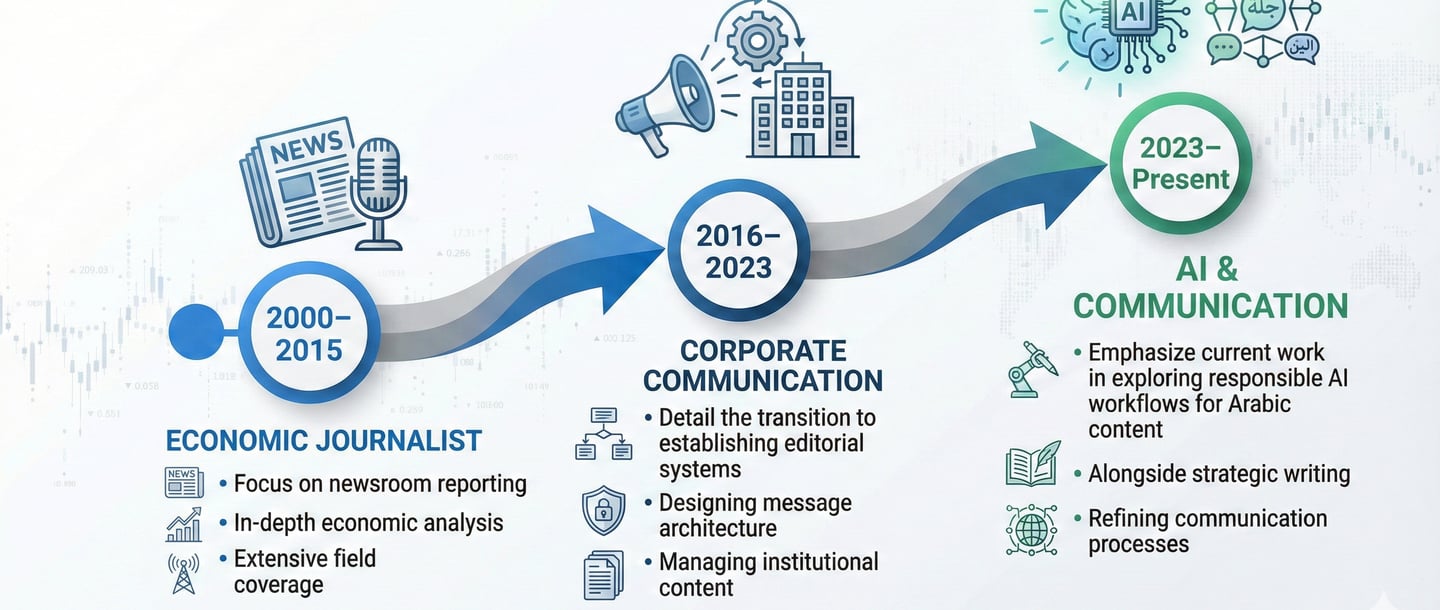
Career Path
From economic journalist to corporate communicator, I’ve built a foundation in storytelling and strategy across diverse fields.
Now focused on AI and communication strategy.
Timeline
Economic Journalist
Various Newsrooms
2000–2015
Reported on economic trends with deep analysis and on-the-ground coverage.
Corporate Communication
Multiple Firms
2016–2023
Built editorial systems and crafted clear message architectures.
What I Truly Believe
Clarity shows respect, strong messages start with thoughtful logic, and AI serves best when steered by human intention.


Clarity is a form of respect.
Strong messages begin with editorial logic, not tools.
AI is useful only when guided by human intention.
Arabic content deserves precision—not haste.
Institutions communicate better when they think like newsrooms.